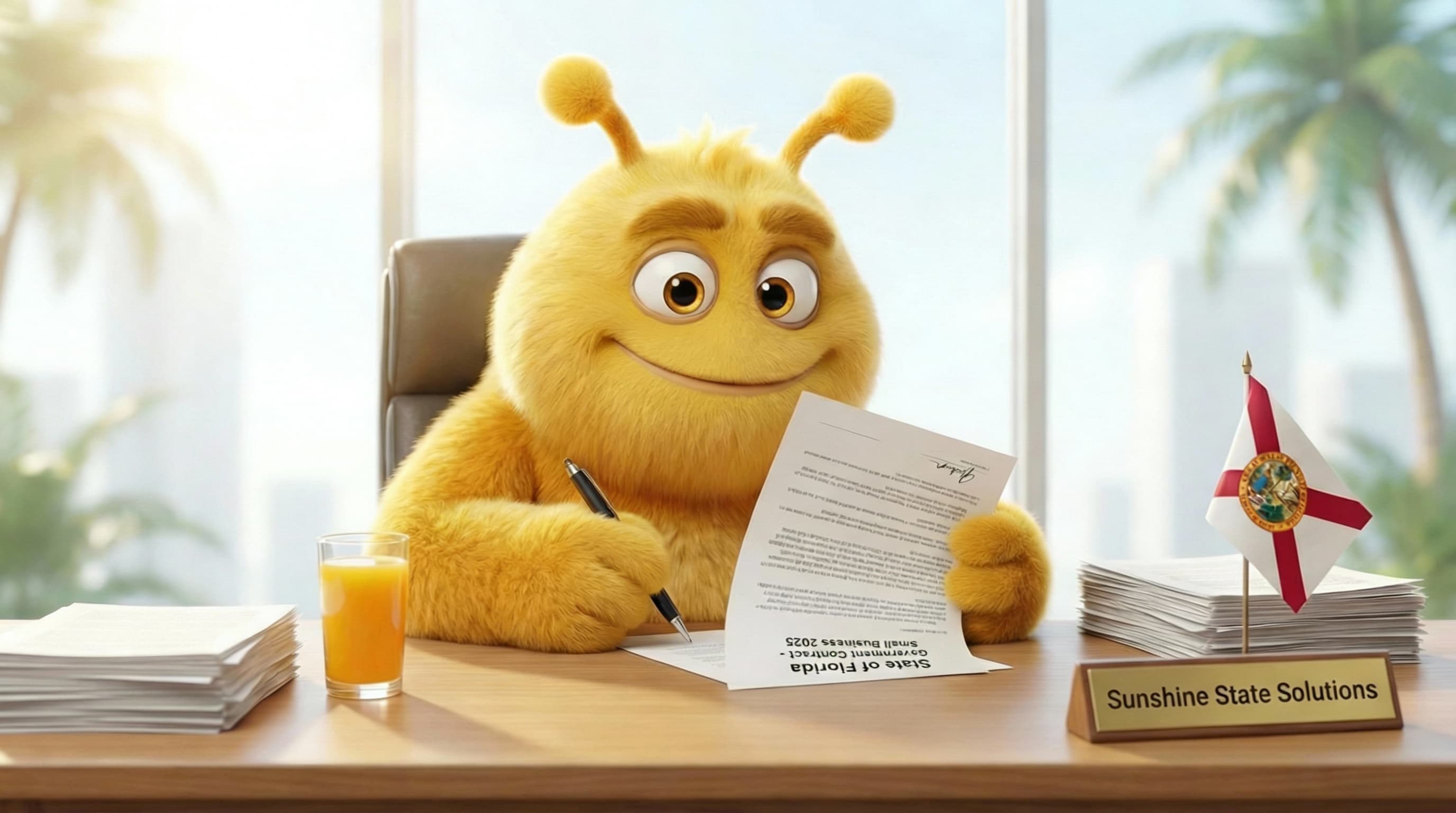
You spent three days estimating labor, getting quotes from suppliers, and filling out forms. You submitted your bid, and... silence. Later, you find out you were "Deemed Non-Responsive." It is the most frustrating feeling in government contracting.
The government procurement process is strict. Unlike a private client who might overlook a missing signature, a government purchasing agent is legally required to reject an incomplete bid. Here are the top 5 reasons bids get rejected in Florida—and how to avoid them.
The Late Submission
The Mistake: The bid was due at 2:00 PM. You submitted it at 2:01 PM.
The Reality: It will be rejected. No exceptions.
The Fix: Treat the deadline as if it is one hour earlier. If the bid is electronic (via OpenGov or Bonfire), do not wait until the last minute when the server might be slow. If it is a paper bid, account for traffic.
Missing Mandatory Meetings
The Mistake: The solicitation stated there was a "Mandatory Pre-Bid Conference" last Tuesday. You were busy and didn't go.
The Reality: You are disqualified from bidding.
The Fix: Read the "Timeline of Events" on page 1 of the bid package immediately. Put the meeting date in your calendar. If you cannot go, send a representative.
Not Acknowledging Addenda
The Mistake: The city changed the due date or the specifications in an "Addendum" document. You submitted your bid using the old forms.
The Reality: Your bid is invalid because you did not agree to the new terms.
The Fix: Always check the bid portal the morning of the submission to see if any last-minute addenda were released.
Missing Signatures or Notarization
The Mistake: You forgot to sign the "Drug-Free Workplace" form, or you didn't get the "Non-Collusion Affidavit" notarized.
The Reality: An unsigned form is considered a non-binding offer.
The Fix: Create a checklist. Print every form that needs a signature. Double-check that your notary stamped the document clearly.
Math Errors
The Mistake: Your unit price is $10. You have 100 units. You wrote the total as $10,000 instead of $1,000.
The Reality: In most cases, the "Unit Price" ($10) rules. The government will correct your total to $1,000. This might drop your total bid price lower than you intended, causing you to lose money if you win.
The Fix: Use a spreadsheet to calculate your bid, never a calculator and a notepad. Double-check your formulas.
How Snepbid Helps You Avoid These Mistakes
While we can't sign the forms for you, Snepbid helps you stay organized.
Stay Organized, Win More
Centralized Dashboard: Keep track of all your opportunities in one place.
Direct Links: We link you directly to the official source so you can check for Addenda.
AI Summaries: Our AI highlights critical dates like the "Mandatory Pre-Bid" meeting so you don't miss them.
“Winning government contracts is about attention to detail. Master the paperwork, and the contracts will follow.”
Frequently Asked Questions
What does "Non-Responsive" mean?
It means your bid did not conform to the rules of the solicitation. This could be missing forms, lack of signatures, or failing to meet technical specifications.
What does "Non-Responsible" mean?
This is different. It means the company is not capable of doing the work. This could be due to lack of experience, poor financial standing, or loss of license.
Can I protest a bid decision?
Yes. Every solicitation has a "Protest Policy." However, protests are expensive and time-consuming. You usually have 72 hours after the award notice to file a formal protest.
Ready to organize your bidding process?
Start Getting Bids